
Method
How we make it
From a sack of unroasted beans to a boxed truffle is about three days. Here is where the time actually goes.
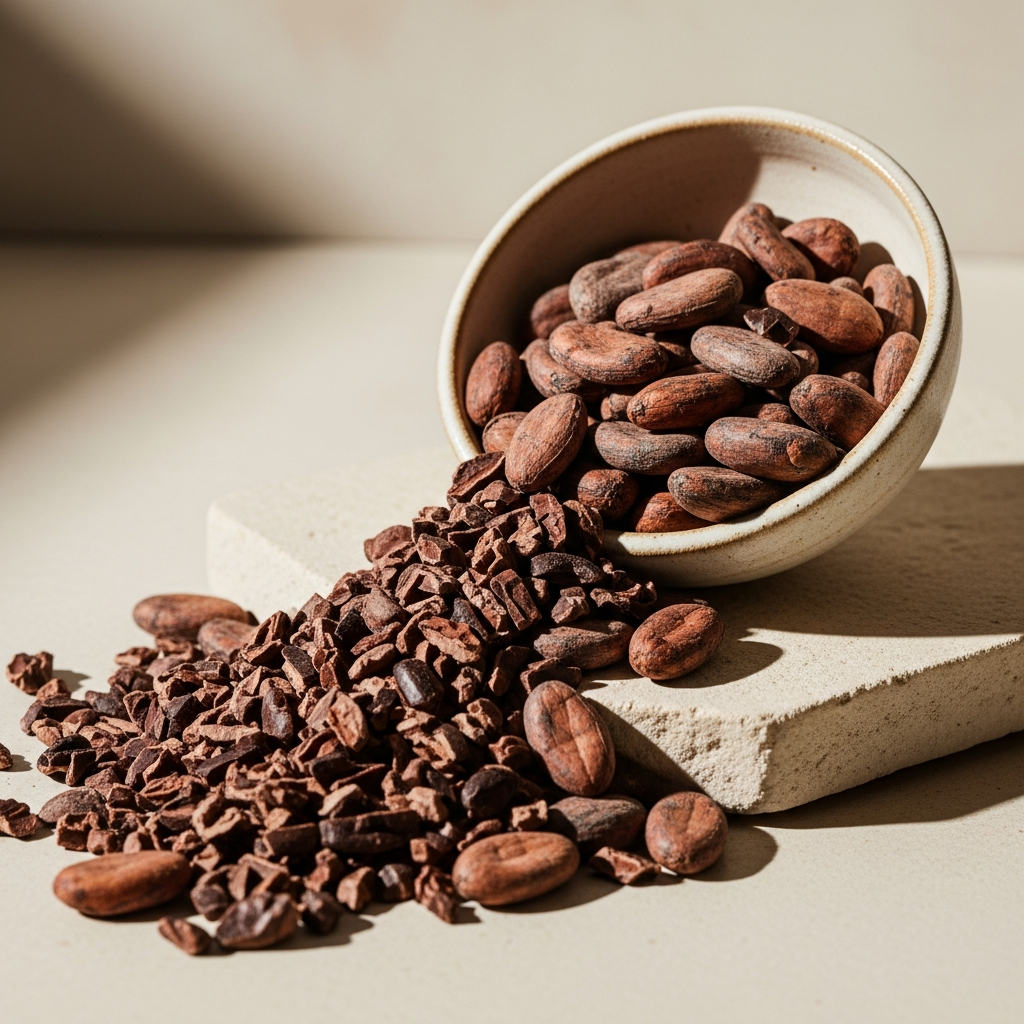 01
01Roast, crack, winnow
Each origin gets its own roast profile, worked out by tasting rather than by formula. Madagascar goes light to protect its acidity; Peru takes more heat before it turns nutty. Then the beans are cracked and the husk blown off, leaving nibs.
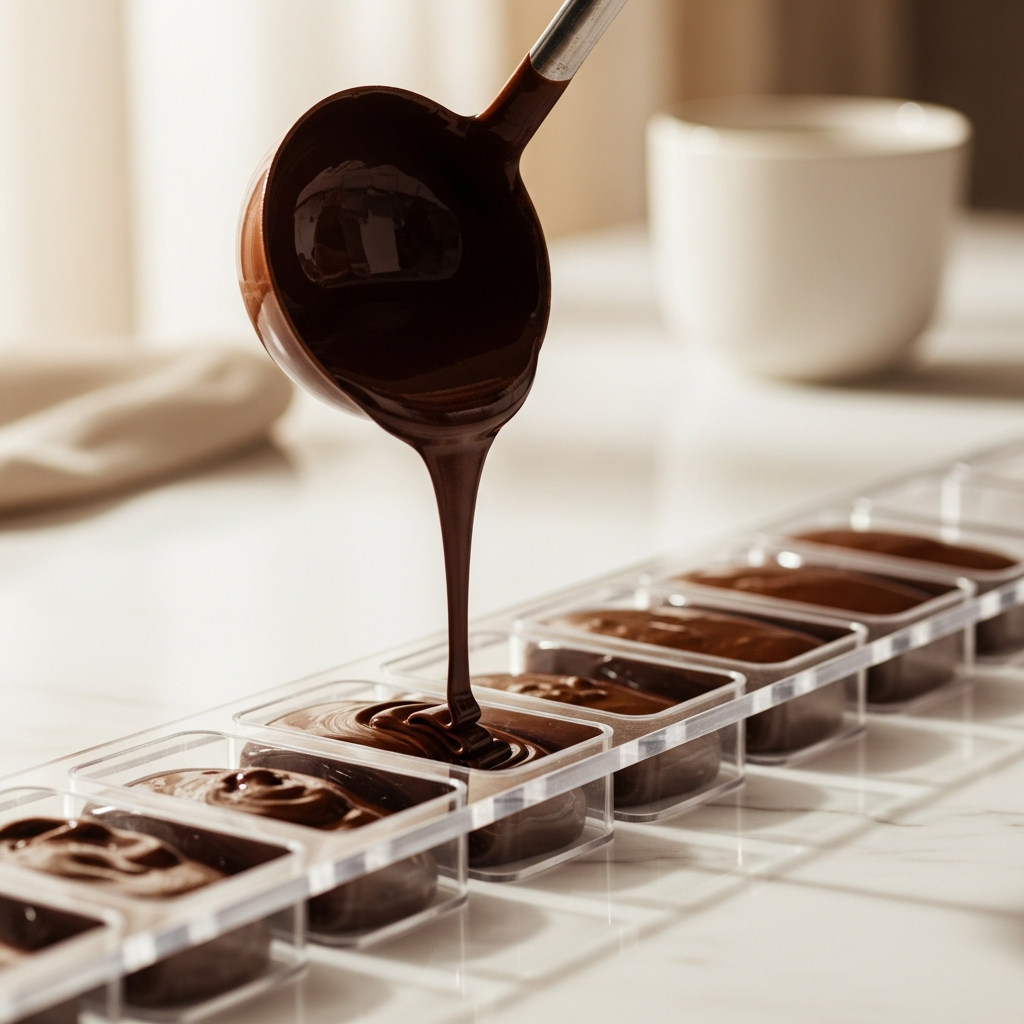 02
02Mill, conch, temper
Nibs are milled to a liquor and conched for about three days, which is what removes the raw edge. Tempering is the step everything else depends on: get the crystal structure wrong and the bar is dull, soft and streaked.
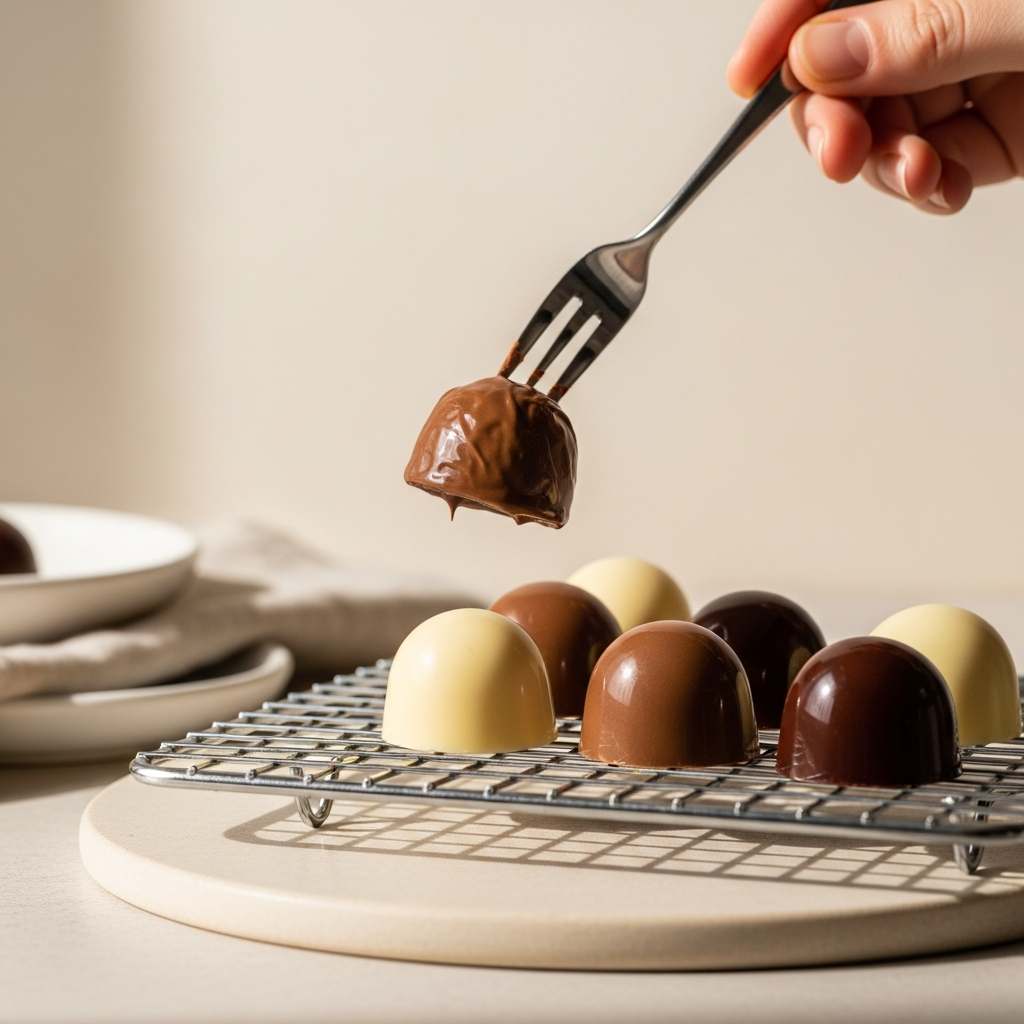 03
03Fill, dip, pack
Ganache is cooked, piped and left overnight to set. The next morning it is hand-rolled or dipped, decorated while the couverture is still wet, and boxed that afternoon.
The parts that get skipped elsewhere
| Step | The fast way | What we do |
|---|---|---|
| Conching | 6–10 hours | About 72 hours |
| Ganache | Stabilised for shelf life | Cream and chocolate, eaten fresh |
| Caramel | Cooked to a timer | Cooked to colour, by eye |
| Tempering | Continuous machine | Hand-tempered in batches |
| Packing | Filled at a co-packer | Packed here, after you order |
None of this makes us better people. It makes the chocolate taste of something, and it costs more, which is the whole trade.
Taste the difference between origins
The Tasting Flight sets six of them side by side, darkest to lightest, with notes.